
Astrophysics
Gravitational physics presents a wide range of questions about how matter and space time interact. The study of this field is rooted in general relativity, where changes in the distribution of mass alter the curvature of space time and produce gravitational waves. These phenomena arise from cosmic sources such as binary systems, black hole mergers, supernovae, and signals from the early universe. In recent years, experimental efforts such as LIGO, with strong involvement from the University of Florida, have confirmed these predictions and expanded opportunities to observe the universe. Researchers are also engaged in projects such as LISA and other studies of dark matter and related topics.

Bartos Group
Experimentalist
Multi-messenger astrophysics and extreme cosmic events

Fulda Group
Experimentalist
Gravitational-wave instrumentation and precision measurement

Klimenko Group
Experimentalist
Gravitational-wave data analysis and signal reconstruction

Lee Lab
Experimentalist
Low-temperature physics and quantum fluids

Mueller Lab
Experimentalist
Supernova simulations and stellar evolution
Ray Group
Experimentalist
Gamma-ray astrophysics and high-energy transients

Saab Group
Experimentalist
Dark matter detection with cryogenic detectors

Sikivie Lab
Experimentalist
Axion dark matter theory and detection concepts

Sullivan Group
Experimentalist
Quantum materials and low-temperature measurements

Tanner Lab
Experimentalist
Axion searches with microwave cavity experiments

Andrews Group
Theorist
Planet formation and protoplanetary disks
Blecha Group
Theorist
Black holes and galaxy evolution
Dror Lab
Theorist
Dark matter and physics beyond the Standard Model

Will Group
Theorist
General relativity and gravitational theory

Siyao Lab
Theorist
Particle acceleration in relativistic plasmas


Bartos Group
The Bartos Group’s research focuses on multi-messenger astrophysics: the exploration of the Universe through combining information from a multitude of cosmic messengers, including gravitational waves, electromagnetic radiation, neutrinos, and atomic nuclei. Each of these cosmic messengers is produced by distinct processes at its origin, and thus carries information about different mechanisms within its source. The messengers also differ widely in how they carry this information to the astronomer: for example, gravitational waves and neutrinos can pass through matter and intergalactic magnetic fields, providing an unobstructed view of the Universe at all wavelengths. Combining observations of different messengers therefore allows us to see more and look further. Of particular interest are extreme cosmic events related to the formation and evolution of black holes and neutron stars.
Graduate Students: Jeremiah Anglin, Austin Lam
Fulda Group
The Fulda Group focuses on experimental gravitational-wave astrophysics and precision measurement, with an emphasis on developing and improving instrumentation used in detectors such as those in the LIGO Scientific Collaboration. Their work includes studying and mitigating noise sources that limit detector sensitivity, advancing interferometric techniques, and contributing to detector commissioning and upgrades. The group is also involved in data analysis and signal validation, helping ensure the reliability of detected gravitational-wave events from sources such as black hole and neutron star mergers. Through this work, they play a key role in enabling more sensitive observations and expanding the reach of gravitational-wave astronomy.
Klimenko Group
The Klimenko Group focuses on gravitational-wave data analysis and multimessenger astrophysics, developing robust algorithms to detect, reconstruct, and interpret transient signals from extreme cosmic events within the LIGO Scientific Collaboration. A major component of their work is the development of coherent WaveBurst and related analysis frameworks, which are designed to identify unmodeled or weak signals in noisy detector data without relying on precise waveform templates. The group works on real-time detection pipelines, sky localization of sources, and characterization of gravitational-wave signals from black hole and neutron star mergers. Their research also contributes to multimessenger follow-up efforts, enabling coordinated observations across gravitational waves, electromagnetic signals, and neutrinos.
Lee Lab
The Lee Lab focuses on experimental low-temperature condensed matter physics, particularly the study of quantum fluids such as superfluid helium using advanced cryogenic techniques. Their research investigates quantum turbulence, collective excitations, and phase transitions in superfluid systems, aiming to understand how macroscopic quantum behavior emerges from microscopic interactions. The group conducts precision measurements at ultra-low temperatures to probe fundamental properties of strongly correlated systems, including vortex dynamics and dissipation mechanisms in superfluids. Their work provides insight into quantum hydrodynamics and contributes to broader understanding of quantum many-body physics under extreme conditions.
Mueller Lab
The Mueller Lab focuses on theoretical and computational astrophysics, using large-scale simulations to study the physics of core-collapse supernovae, neutron star formation, and massive star evolution. Their work emphasizes modeling the complex interplay of hydrodynamics, neutrino transport, and nuclear physics that drives stellar explosions, with the goal of understanding why and how supernovae successfully explode. The group also investigates the formation of compact remnants, gravitational-wave and neutrino signals from stellar collapse, and the synthesis of heavy elements in these extreme environments. By developing and running high-resolution numerical models, they help connect theoretical predictions with observations of supernovae and their remnants.
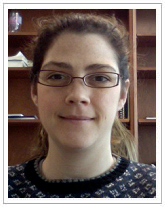
Ray Group
The Ray Group focuses on observational high-energy astrophysics, particularly the study of gamma-ray emission from extreme cosmic sources such as pulsars, active galactic nuclei, and gamma-ray bursts using data from instruments like the Fermi Gamma-ray Space Telescope. Their work involves analyzing time variability, spectra, and multiwavelength counterparts to understand particle acceleration mechanisms and radiation processes in relativistic environments. The group is also actively involved in multimessenger astrophysics, coordinating gamma-ray observations with gravitational-wave and neutrino detections to study transient events and probe the most energetic phenomena in the Universe.
Saab Group
The SuperCDMS experiment is searching for evidence of direct interaction of relic dark matter particles with cryogenic detectors. The experiment in located 2km underground in a mine in Sudbury Canada (along with a slew of other low background, rare event search experiments) to shield it from the high rate of cosmic ray backgrounds found at the surface. SuperCDMS uses superconducting transition-edge sensors to measure the energy deposited by particle interaction within a Si or Ge crystal cooled to 15 mK. At UF, the Saab Group works on understanding the microscopical physical process driving the SuperCDMS detector response with the Geant monte-carlo simulation bridging the areas of low temperature condensed matter physics and particle physics. As the experiment starts taking data in early 2026, we will also be involved analysis of the dark matter data as well as planning for any future experiments.
Graduate Students: David Sadek, Loida Rosado Del Rio, Nicholas Maldonado
Sikivie Lab
The Sikivie Lab focuses on experimental particle physics and cosmology, with emphasis on dark matter detection and axion physics. Current research investigates caustic ring structures of dark matter and their particle trajectory dynamics, as well as the design and construction of reentrant microwave cavities for axion dark matter searches. The work aims to detect dark matter through laboratory-based experiments probing physics beyond the Standard Model.
Graduate Students: Antonios Kyriazis, Yuxin Zhao
Sullivan Group
The Sullivan Group currently focuses on using unique high-sensitivity techniques to measure the radio frequency susceptibility of quantum magnets at low temperatures. Recent results include the direct detection of electric field induced changes in the magnetic susceptibility of frustrated Fe-3 trimers considered as potential quantum qubits. The group also uses magnetic resonance techniques to study the dynamics of quantum fluids and solid at very low temperatures, notably the motion of 3He impurities in solid 4He, and the properties of H2 constrained to the interior cages of molecular organic frameworks.
The Sullivan laboratory operates a low temperature axion haloscope using a superconducting resonant coil and a 3He refrigerator.
Undergraduate Researchers: M. Solano, Nugyen Trinh
Tanner Lab
The Tanner Group focuses on experimental searches for dark matter, particularly axions, using precision microwave cavity experiments designed to detect axion to photon conversion in the presence of strong magnetic fields. Their work involves the development of ultra-sensitive detection systems, including high-quality-factor resonant cavities, low-noise amplifiers, and cryogenic technologies required to observe extremely weak electromagnetic signals. The group is involved in axion haloscope experiments such as ADMX, contributing to detector design, data acquisition, and signal analysis. Their research aims to probe unexplored regions of axion parameter space and improve the sensitivity of dark matter searches through advances in instrumentation and measurement techniques.
Andrews Group
The Andrews Group focuses on theoretical and computational astrophysics, particularly the study of planet formation and protoplanetary disk evolution, with an emphasis on interpreting high-resolution observations from facilities such as Atacama Large Millimeter/submillimeter Array. Their work investigates the distribution and dynamics of gas and dust in disks, the processes that lead to the formation of planetesimals and planets, and the observable signatures of these processes in disk structures such as rings, gaps, and spirals. By combining detailed modeling with observational data, the group aims to better understand how planetary systems like our own Solar System form and evolve.
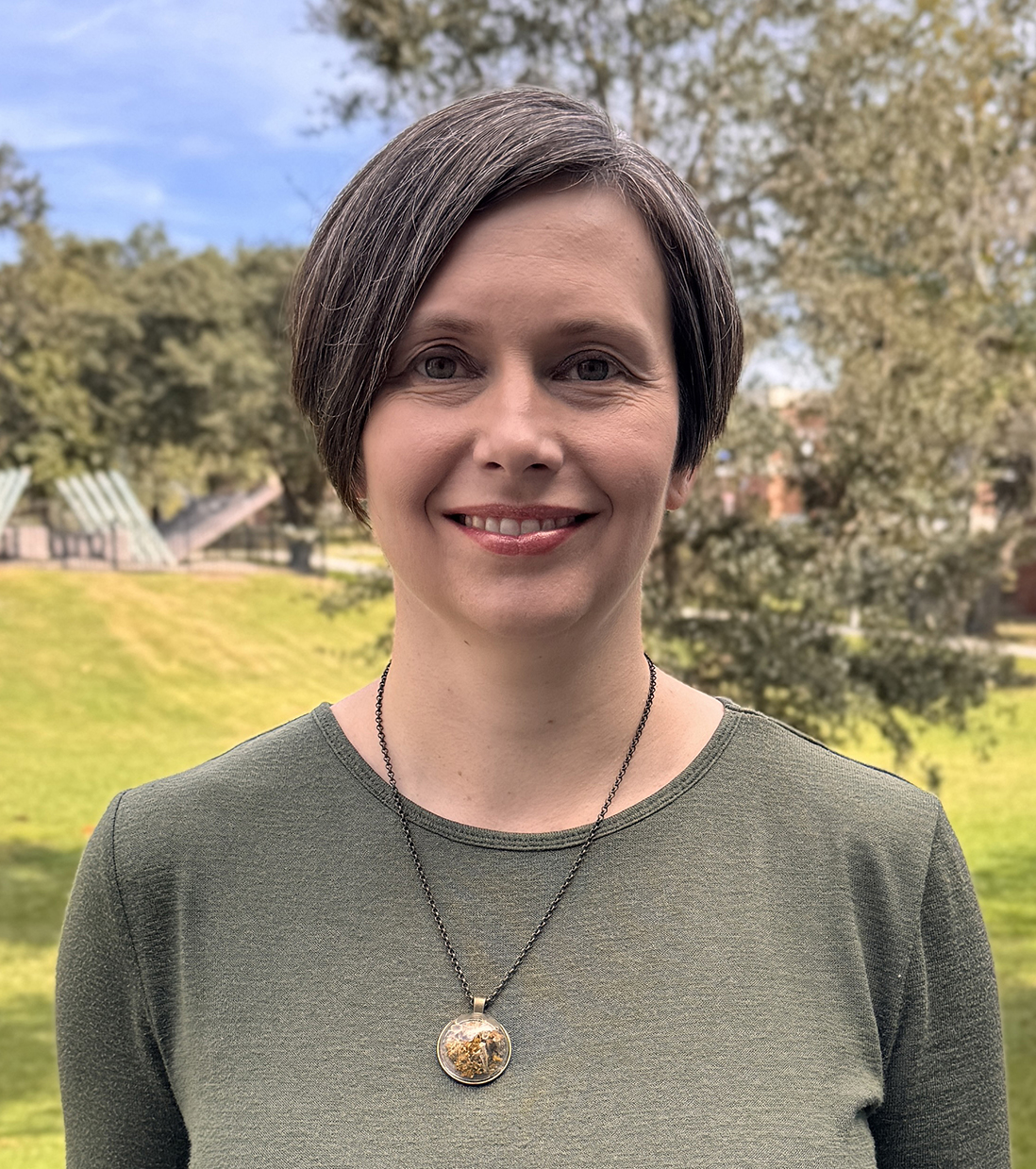
Blecha Group
The Blecha Group focuses on theoretical astrophysics, particularly the study of supermassive black holes and their role in galaxy evolution, with an emphasis on black hole mergers, gravitational recoil, and the dynamics of black holes in galactic environments. Their work uses large-scale simulations to explore how black holes grow, interact, and influence their host galaxies, as well as the observational signatures of recoiling or offset active galactic nuclei. The group also investigates connections between black hole mergers and gravitational-wave signals, helping link theoretical predictions with observations.
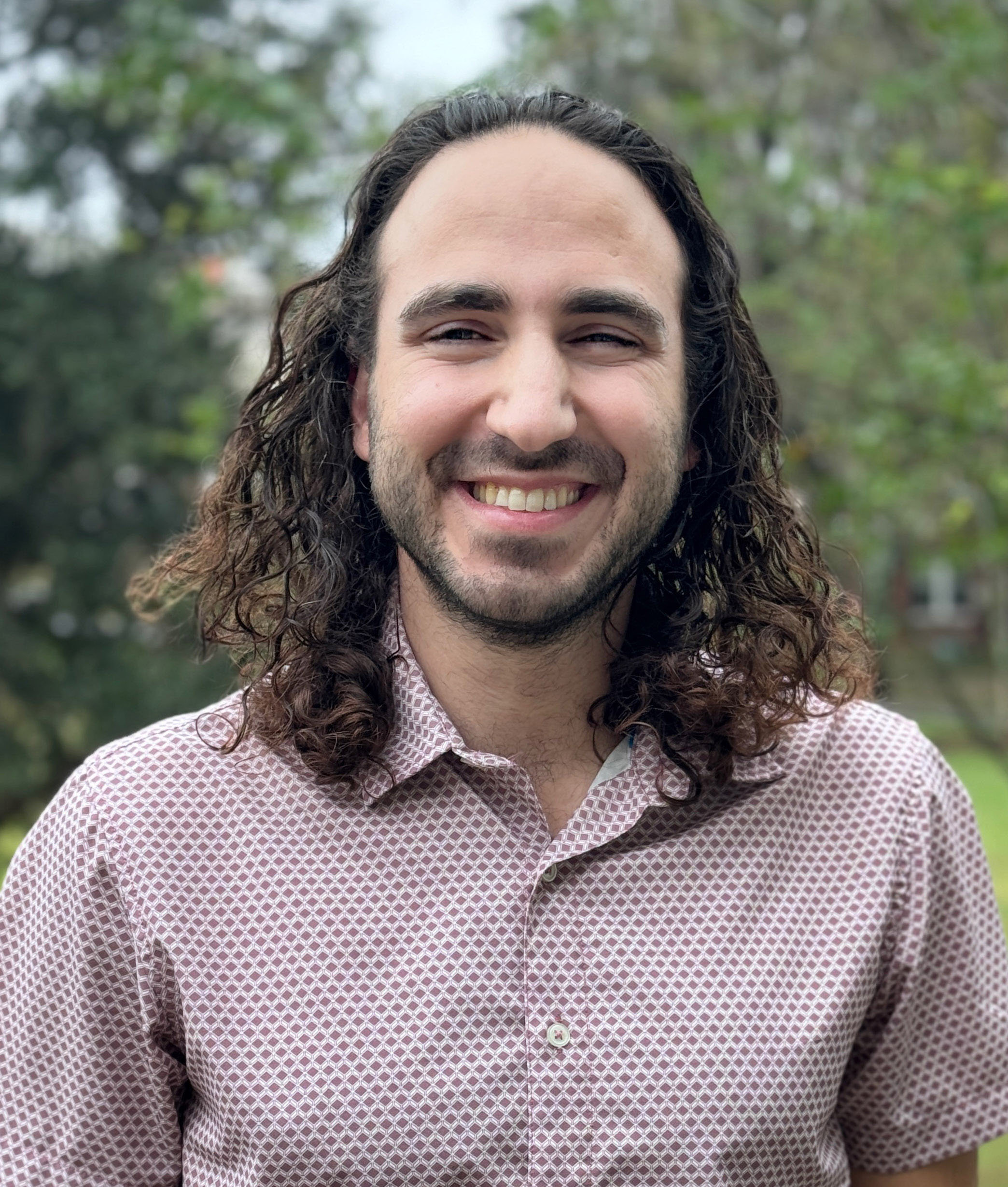
Dror Lab
The Dror Lab focuses on theoretical particle physics and astrophysics, particularly the study of physics beyond the Standard Model with an emphasis on dark matter, neutrinos, and hidden sector particles. Their work explores how new particles and interactions could be detected through astrophysical observations, cosmology, and laboratory experiments, including signatures in early Universe physics and high-energy phenomena. The group develops theoretical frameworks and phenomenological models to guide experimental searches and interpret potential signals of new physics.
Will Group
Professor Will works on the theory of gravitational radiation from astrophysical sources, and analysis of the science return from laser interferometric gravitational-wave observatories, both on the ground (LIGO, Virgo, KAGRA) and in space (LISA). He studies and proposes tests of general relativity in the solar system, in binary pulsars and in the dynamical strong-field regimes of inspiralling compact binaries, and analyzes interesting alternative theories of gravity (while still firmly believing that Einstein was right). He also investigates the relativistic effects of massive black holes on surrounding stars and dark matter, and develops sophisticated analytical methods for studying the evolution of three-body systems, with and without relativistic effects, with applications to systems ranging from exoplanets to binary systems orbiting supermassive black holes.
Siyao Group
The Siyao Lab studies particle dynamics in strongly magnetized plasma, focusing on how particles accelerate and move in relativistic turbulence. Current work includes analyzing trajectories of particles under extreme plasma conditions, helping to better understand high-energy processes relevant to astrophysical and laboratory plasma systems.
PhD Student: Gigla Shekiladze
Postdoc student: Dr. Saikat Das

Trajectory of a Particle Accelerated in Relativistic Turbulence in Strongly Magnetized Plasma